

Regulations
Launch of Idarati.ma, a public portal providing information on administrative procedures and e-Government services available online. Launch of the national strategy Maroc Numeric 2013.

Morocco has made significant progress in the area of e-Governance in recent years. The country has launched a number of initiatives aimed at improving service delivery and increasing citizen engagement through digital channels.
In order to ensure the continuity of the momentum created by the previous national strategy, Maroc Numeric 2013, and to further boost the development of the digital economy sector, a new vision, Maroc Numeric 2020, has been developed. It mainly focuses on accelerating Morocco’s digital transformation and strengthening the role of the country as a regional digital hub. To ensure the smooth implementation of these strategies, the country launched a national plan for 2018-2023 to expand the internet network and coverage in rural areas.
Launch of Idarati.ma, a public portal providing information on administrative procedures and e-Government services available online. Launch of the national strategy Maroc Numeric 2013.
Launch of applications for biometric passports.
Launch of the Public Procurement Portal.
Launch of the platform E-GOV to provide citizens with access to the online services of the Moroccan administration. The platform has been implemented through a vast e-Government programme consisting of a portfolio of 89 projects and services, for an overall investment of more than 2 billion dirhams (545 million USD).
Implementation of the Online Tax Services. Launch of the national strategy Maroc Numeric 2020.
Establishment of the Agency for Digital Development (ADD).
Implementation of an e-schooling platform called TelmidTICE. Launch of the national plan for 2018-2023 to expand the internet network and coverage in rural areas.
Launch of the Startup Hub portal in Rabat by the Agency for Digital Development (ADD).
Launch of the National Portal of the Ministry of Justice, which allows to schedule appointments at courts and tribunals online and provides other e-services including online legal consultation.
Modernisation of the platform Idarati.ma.
Moroccan Ministry of Youth announced establishment of a digital library with more than 36,000 books, accessible to all citizens. Plans to develop a national e-health system announced. The new platform is to put an end to the fragmentation of existing e-health systems implemented by hospitals, regional health authorities, and different national health programmes. Launch of the Unified Social Register Portal.
Agreement between Israel and Morocco to establish a research center aimed at the development of innovations and AI. Morocco’s Nuclear Safety Agency (AMSSNUR) digitized services, enabling online import authorizations and payments via PortNet-SIGAM and PORTNETPAY. White paper “E-Gov – Towards which Digital Administration in Morocco?” presented.
Publication of the National Strategy “Digital Morocco 2030”, and announcement of the launch of a single portal for public services.
Announcement of the Moroccan government plans to invest USD 8 bln to deploy 5G technology across the country, with the goal of covering 85% of the population by 2030. Signing of the protocol agreement with French group Onepoint establishing a data and AI excellence center in the Casablanca-Settat region.
As of 2022, Morocco ranked 90th in the UN E-Government Development survey (compared to 101st in 2022), with an EGDI (e-Government Development Index) rating of 0.69. According to the World Bank GovTech Maturity Index, Morocco was among the countries with significant focus on GovTech with GTMI (GovTech Maturity Index) amounting to 0.613.
In 2021, Morocco ranked 8th in the “Digital Risers” (ranking of countries in terms of digital competitiveness made by European Center for Digital Competitiveness) of countries in the MENA region).
As reported in the national study conducted to assess the e-Gov index of Moroccan public e-services, results show that only 23% of national public e-services are fully digitised (the high level of maturity) and 60% of e-services are still informational (the low level of maturity). Additionally, the granular assessment indicates that dependent e-services whose data and interactions depend on other administrations (external or internal) have the least rank.

Ministry of Digital Transition and Administration Reform
The Ministry of Digital Transition and Administration Reform (Ministère de la Transition Numérique et de la Réforme de l’Administration) in Morocco is a key government body responsible for advancing the country’s digital transformation and improving public administration efficiency. Key functions include digitalizing public services with a focus on making digital services available for citizens, businesses, and intergovernmental operations. The ministry also oversees the implementation of the ‘Digital Morocco 2030’ strategy, aimed at improving e-government services and enhancing digital infrastructure. Additionally, it works to simplify administrative processes through digital means to increase government transparency and improve the overall efficiency of public services.
Digital Development Agency
The Digital Development Agency (Agence du Développement du Digital, ADD), created under Law N ° 61.16 in 2017, is a strategic public institution operating under the the Ministry of Digital Transition and Administration Reform. The ADD is more focused on the technical aspects of digital transformation, such as developing digital infrastructure, supporting startups, managing digital projects, and enhancing technological innovation. It serves as the implementing body for many of the ministry’s strategic initiatives.
National Telecommunications Regulatory Agency
The National Telecommunications Regulatory Agency (ANRT, Agence Nationale de Réglementation des Télécommunications) in Morocco is a government body operating under the supervision of the Prime Minister. Established in 1998 under the ANRT is responsible for regulating the telecommunications sector, ensuring fair competition, and promoting the development of digital infrastructure. Its primary functions include managing the allocation of radio frequency spectrum, issuing licenses to telecommunications operators, and ensuring compliance with regulations. The ANRT also works to protect consumers by ensuring the quality and affordability of services handling the telecommunications market and disputes between operators.
General Directorate of Information Systems Security
The General Directorate of Information Systems Security (Direction Générale de la Sécurité des Systèmes d’Information, DGSSI) in Morocco is responsible for securing the country’s information systems across both public and private sectors. It develops and implements national cybersecurity policies and strategies, ensures compliance with security standards, and provides oversight of the security of digital infrastructure. DGSSI was established by a decree n° 2-11-509 on September 21, 2011. It is attached to the National Defense Administration of the Kingdom of Morocco.The DGSSI coordinates responses to cybersecurity incidents, works to protect national critical infrastructure, and promotes cybersecurity awareness through training and resources. It also collaborates with national and international organizations to share information on threats and best practices, supports research and development in cybersecurity, and helps shape legal frameworks related to data protection and digital security. Additionally, the DGSSI works to prevent and investigate cybercrime, ensuring the resilience and security of Morocco’s information systems.
Cybercrime Law
Issued on July 25, 2020, Law No. 05-20 relating to cybersecurity, establishes a legal framework aimed at strengthening the security of information systems of public entities. It defines the rules and security measures applicable to ensure the resilience of these systems.
Data Protection Law
Law No. 09-08 relating to the protection of individuals with regard to the processing of personal data, promulgated on February 18, 2009, aims to protect individuals against abuses related to the use of their personal data. It aligns the Moroccan data protection system with international standards and establishes the National Commission for the Control of Personal Data Protection (CNDP).
Electronic Signature Law
Proposed on November 30, 2007, Law No. 53-05 relating to the electronic exchange of legal data establishes the regime applicable to legal data exchanged electronically and recognizes the legal equivalence between electronic and paper documents. It also defines the legal framework for electronic certification service providers and the rules that they and electronic certificate holders must comply with.
Interoperability Framework
Law No. 55-19, from March 6, 2020, aims to simplify administrative procedures and formalities in Morocco, with the aim of strengthening trust between the administration and users. It establishes several general principles, including transparency, simplification, the definition of maximum deadlines for processing requests, and the promotion of the digitalization of administrative services. In 2022 the Moroccan General Directorate of Taxes equipped itself with a conversational agent “chatbot” as part of the diversification of its communication channels and facilitation of its interactions with users.
National Interoperability Platform (GISRE, Gestion Intégrée et Sécurisée des Ressources de l’État)
The National Interoperability Platform, known as GISRE, is based on an API management solution and offers features such as secure access, encryption of exchanged data and auditing of events.This platform facilitates interaction and data exchange between public and private administrations and organizations, thus improving the efficiency of public services.
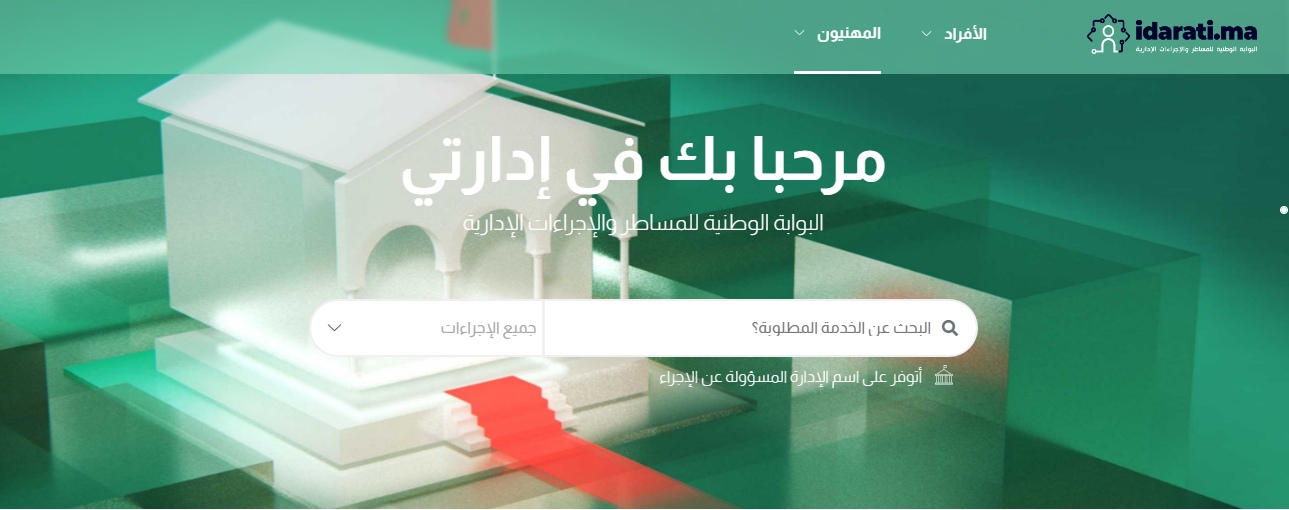
Idarati.ma (Idarati – “my administration” in Arabic) is a public portal providing information on administrative procedures and e-Government services available online. This platform is the only official, reliable and integrated electronic space to obtain all information related to administrative services and to complete administrative transactions related to them. This portal exclusively includes administrative procedures and decisions that have been approved by the National Committee for Administrative Procedures, and its content is being gradually updated and renewed with all decisions approved by the Committee. The site provides information on 6 fields, including Work and Employment, Health and Social Affairs, etc. As of March 2025, Idarati is being transformed into a full-scale one-stop shop portal unifying over 2700 administrative procedures,
Source: Idarati (main page)
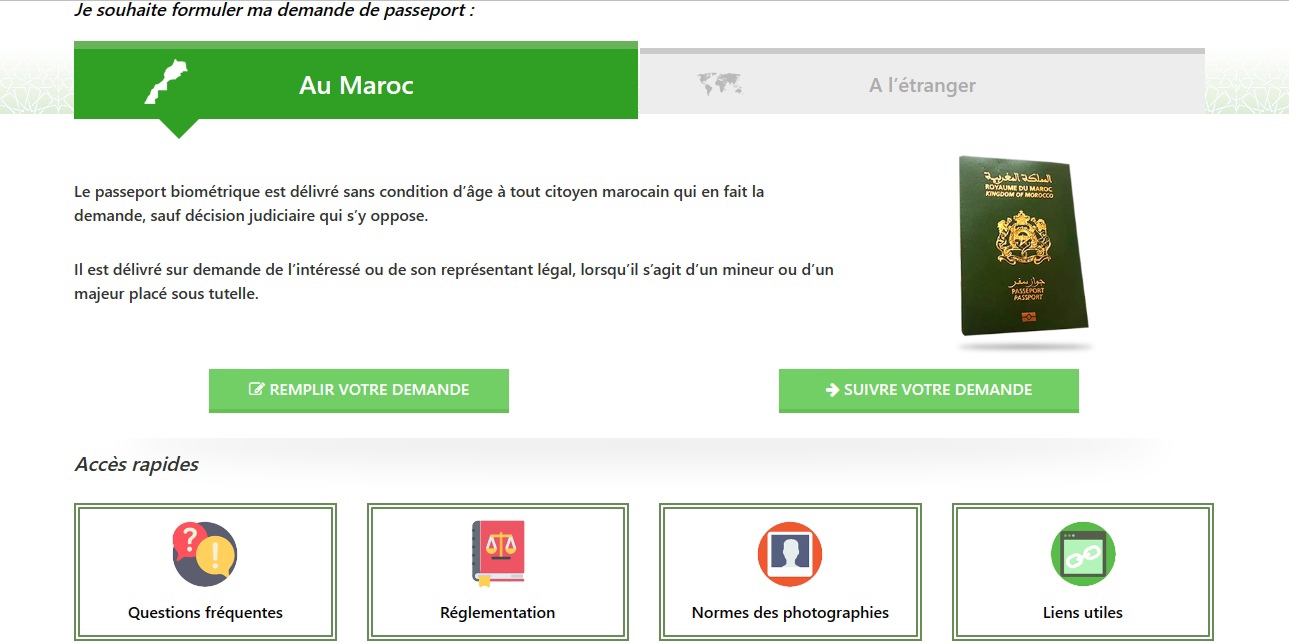
In 2020 Morocco introduced National Identification Cards and issued over 10 mln of them (⅓ of the country’s population), with more 9 mln users accessing digital services via NFC-enabled cards. Cards contain Biometric data (fingerprint + facial recognition) stored on secure chips, NFC authentication can be used via smartphones/readers for remote access to services. They are issued without any age condition to any Moroccan citizen who requests them unless a court decision opposes it. Along with biometric passports, the Moroccan administration has implemented electronic national identity cards which considerably simplified the administrative procedures for obtaining certain documents (in particular the certificate of residence). The development of Morocco’s biometric national identity cards was undertaken in a partnership with IDEMIA, a French company specializing in identity-related security solutions.
Source: Passeport.ma (main page)
Morocco is on its way to become one of the leaders of the African region in terms of the number of payments made with the help of e-Tax systems. By the end of 2024 almost 2 mln tax payments and consultations transactions were made through the General Treasury of Kingdom (TGR, Tresorerie Generale du Royaume) website. This page allows taxpayers to submit tax declarations, pay declaration fees and verify the authenticity of the tax documents using smartphone and QR-code scanner. Additionally, General Directorate of Taxation (DGI, Direction Générale des Impôts) set an initiative of mandatory e-Invoicing for all businesses by 2026 to increase efficiency and transparency of all operations.

Source: e-Services portal of the General Directorate of Taxation
Despite the fact that 1 of every 3 transactions is conducted digitally and there is a positive trend of increasing the number of digital wallets, the total amount of physical cash in circulation in Morocco amounts to approximately 30% of the GDP, or 157 billion dollars, one of the highest figures worldwide. “Digital Morocco 2030” aims at reducing the number of cash payments and focuses on providing more digital solutions, including government-backed.
In January 2024, the Ministry of Justice announced an upcoming launch of a digital platform for managing citizenship applications, allowing citizens to submit and track their applications online, thereby reducing processing times and increasing transparency.
Source: mahakim.ma
Besides, there is a specialized website to have an online appointment request for consular services (submitting an application for Moroccan nationality certificate for people of diaspora).
Since 1999, Morocco has placed particular importance on the integration of ICT into the education system. In 1999 Morocco initiated the Emergency Program for the Integration of Information and Communication Technologies in Education (Programme d’Urgence pour l’Intégration des Technologies de l’Information et de la Communication dans l’Éducation).
In March 2005 the strategy aimed at the widespread use of ICTs in public education was adopted. Its implementation at the primary and secondary education levels should help ensure access to ICTs facilities and services to more than 22% of the Moroccan population, with appropriate content, throughout the Kingdom of Morocco.
The GENIE program is a part of this ICTs generalization strategy. Launched in early 2006 and revised in 2009, the program, which covers all schools in Morocco, comes in four main areas, including infrastructure (installation of Internet-connected multimedia environments), teacher training (several training modules are provided for inspectors, principals and teachers), digital resources (creation of national digital library and a national ICT portal) and usage development (providing technical support to users).
The Nafida program, initiated by Mohammed VI Foundation, aims to enhance access to ICT for Morocco’s teachers. Launched in May 2008, Nafida – 1 has helped with purchasing the computers and internet subscriptions for 150,000 professionals. Total budget of Nafida – 1 was approximately 430 mln Moroccan dirhams. Nafida 2 was introduced on June 9, 2021, as part of the foundation’s 2018-2028 action plan. This second edition offers computer purchase subsidies up to 2000 Moroccan Dirhams, discounted Internet and mobile services – 25% reduction on public rates for high-speed internet subscriptions, with total budget allocations of 300 mln Moroccan dirhams.
By June 2024, three years after its launch, Nafida 2 had surpassed 100,000 beneficiaries.
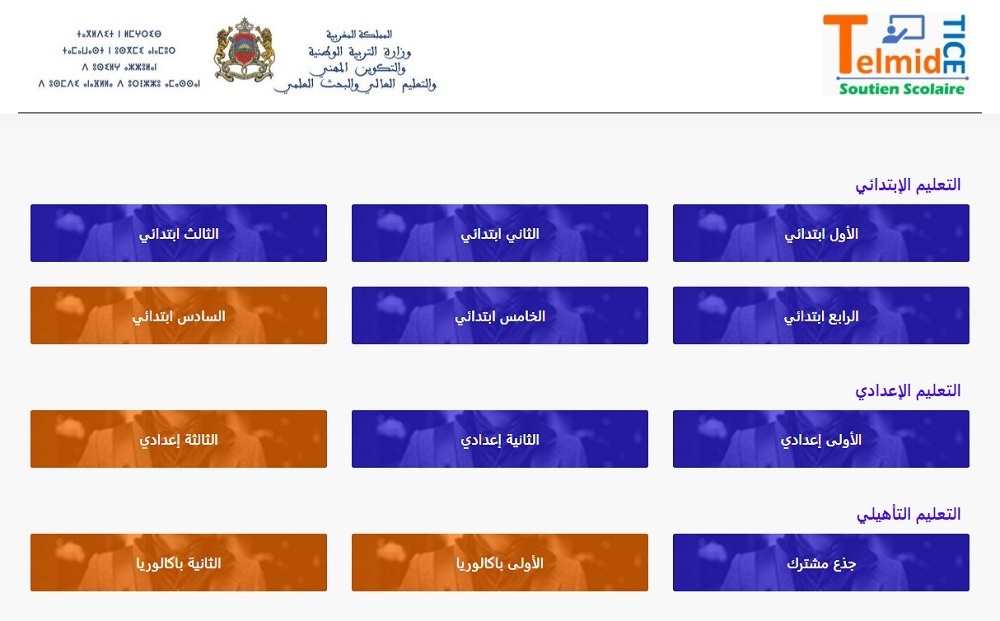
In 2020 Morocco has implemented an e-schooling platform called TelmidTICE to provide students online learning opportunities. The platform, which is available in both Arabic and French, was launched by the Ministry of National Education, Vocational Training and Scientific Research. The TelmidTICE platform offers a range of features, including interactive courses, videos, and practice exercises. Teachers can also use the platform to create and manage virtual classrooms, set assignments, and monitor student progress. The platform is accessible to all students in Morocco and can be accessed on a variety of devices, including smartphones, tablets, laptops, and desktop computers. The platform has been particularly useful during the COVID-19 pandemic when schools were closed, and students had to resort to online learning.
Source: TelmidTICE (main page)
In 2022, the Moroccan Ministry of Youth announced the creation of a digital library with more than 36,000 books, freely accessible to every citizen. The books are categorised by age group and subject. Every week, the digital library will be updated with new books published by more than 400 authors. According to the Ministry, the library was created to diversify the digital services offered by media libraries and contribute to the vulgarisation of new information technology standards in the publishing sector.
In 2018 the Moroccan government developed the National Digital Health Strategy, aimed at integrating digital technologies into the healthcare system to improve services and ensure equitable access to care. This strategy includes the establishment of a National Health Information System to centralize and harmonize health data across the country .
Electronic Medical Records (EMR)
The adoption of Electronic Medical Records (EMR) is underway in several healthcare facilities in Morocco. For example, the HOSIX system, developed by the Spanish company SIVSA, has been used since 2009 in some public hospitals, integrating various modules for clinical and administrative functions, including medical records, pharmacy, laboratory, radiology, operating rooms, emergency services, billing, and appointment scheduling.
Several digital platforms have been developed to facilitate the booking of medical appointments online, thus improving access to care for patients, such as DabaDoc. Founded in 2013, this platform allows patients to find and book appointments with healthcare professionals nearby. Odocteur, launched in 2021, offers online appointment booking service with specialists, general practitioners and other healthcare professionals.
Telemedicine has become an essential tool for improving access to healthcare, especially in rural and remote areas. The Moroccan government has launched a national telemedicine initiative aimed at covering 80% of “medical deserts” by 2025, targeting a population of 1.5 million people.
As of April 2025, Morocco has implemented electronic voting (e-voting) mechanisms within certain governmental institutions, notably the House of Councillors (Chambre des Conseillers, upper house of Parliament), which adopted remote electronic voting for legislative sessions in May 2020. However, there is no dedicated governmental website exclusively for e-voting services accessible to the general public.
The Moroccan Agency for Digital Development (ADD) launched Cadre Général d’Interopérabilité (GISRE) – an e-government interoperability platform aimed at facilitating secure and transparent data exchange among public administrations, agencies, and institutions. The platform is primarily designed for use by Moroccan government entities and is not accessible by the general public. It has been operational since 2021 and is used by national projects such as the RSU (Unified Social Registry), AMO Tadamoun, as well as in the exchange of data between the Massar system and its ecosystem. The platform ensures encrypted data sharing between various government institutions by utilizing APIs to connect different government databases securely.
Morocco has established digital systems for weather monitoring and forecasting. The Moroccan Meteorological Service operates digital platforms such as meteomaroc.com, which provides weather data for various regions of the country. This service offers 15-day weather forecasts for cities like Casablanca, including detailed information on temperature ranges, precipitation levels, and wind speeds.
Morocco is also monitored by Regional Observatories for Environment and Sustainable Development (OMEDDs): established in each region, OREDDs manage the Regional Environmental Information Systems (SIRE), which are responsible for producing and disseminating environmental information tailored to regional contexts. As part of its dual function of observatory of the environment and sustainable development and of systemic and foresight analysis center, Plan Bleu’s mission, since its creation in 1977, is to provide the Contracting Parties to the Barcelona Convention with data, statistics and indicators to feed into assessments illustrating trends of relations between environment and development in the Mediterranean and to draw up scenarios, enabling them to take actions and support the decisional process.
The Startup Hub portal, launched in 2019 in Rabat, was set up by the Digital Development Agency (ADD). Through this platform, the young innovative companies benefiting and listed at this portal, will have the possibility of paying in foreign currency for services imported in connection with their activities up to 500,000 DH per calendar year. In accordance with the Morocco growth strategy (Horizon 2025), it is planned to create a net of more than 2,500 startups over the next five years.
Source: Startup Hub Portal
e-Procurement
Public Procurement Portal of Morocco serves as a hub for publishing contract awards and tender notices and allows users to view and download tender documents. The e-procurement platform ranked 5th most visited government website in June 2023 with the number of visits exceeding 300 thousand visits.
Source: Public Procurement Portal
Customs
Initiated in 2008 by the National Ports Agency (Port Authority in Morocco), the PortNet Single Window is a tool aimed at implementing several sectoral strategies to improve the business climate, trade, port and logistics. It helps more than 90000 users, through more than 120 innovative and exclusively electronic community services, to facilitate the process of import/export operations.
The process of registering a company and licensing a business in Morocco involves several steps, including checking name availability, drafting articles of association, obtaining a tax identification number, and acquiring necessary licenses and permits. Guides are available to assist entrepreneurs through these procedures.
Morocco’s electronic payment ecosystem is anchored by the Centre Monétique Interbancaire (CMI). The CMI serves as the central intermediary for electronic commerce transactions, supporting both cardholders and online merchants.
Founded by nine major banks (including Arab Bank, Attijariwafa Bank, BCP, BMCE, BMCI, Crédit Agricole du Maroc, CIH, Crédit du Maroc, and SGMB), the CMI has established a high-performance, secure technical platform for remote payments. This infrastructure has made remote purchases possible in Morocco and supports various electronic transactions, including even G2B payments.
The Ministry of Agriculture is actively developing a comprehensive digital transformation strategy for the entire agricultural ecosystem. This digital revolution forms a central component of the country’s “Generation Green” strategy, which places innovation and sustainability at the core of agricultural development. In 2022, the Ministry of Agriculture started working on a strategic roadmap specifically designed to initiate the digital revolution in the agricultural sector. This initiative encompasses both institutional entities and farms throughout the agricultural value chain. The ministry allocated a budget exceeding 4.5 million dirhams for a foundational study to define the strategic orientation for this digital transformation.
Morocco has set ambitious targets within its digital agriculture framework. By 2030, the country plans to connect at least 2 million farmers to digital service platforms.
Moroccan agriculture is witnessing the integration of sophisticated digital technologies including automated robots and drones for monitoring and operations, artificial intelligence and Big Data analytics for decision support, electronic traps for pest management, web platforms and agricultural management software for comprehensive farm administration
Additionally, Moroccan agritech has an ecosystem of startups emerging in response to the agricultural sector’s digital needs. For example, SOWIT develops mobile applications providing precision data to farmers on irrigation, fertilization, and yields through sensors and artificial intelligence. Arwa Solutions specializes in irrigation management through mobile applications connected to field sensors. AgriBusiness.ma offers a platform enabling Moroccan farmers to market their agricultural production, equipment, land, or farms.
The Moroccan government has also launched Pôle Digital de l’Agriculture, de la Forêt et de l’Observatoire de la Sécheres – a digital hub focusing on internal modernization, promoting investment in Agriculture 4.0, and coordinating governance for digital transformation in agriculture.
In January 2022, the President of the Economic, Social and Environmental Council (CESE), (the organization set up as an independent constitutional institution by His Majesty King Mohammed VI on February 21, 2011, organization carries out advisory missions on major development guidelines, economic and social public policies as well as those concerning sustainable development and advanced regionalization), Ahmed Réda Chami, called for the establishment of a national policy dedicated to artificial intelligence (AI) by giving it priority in the digital transformation project. He highlighted that it is necessary to ensure, within a maximum period of 3 years, widespread access to high-speed Internet for the entire population, with a satisfactory quality of service and an affordable competitive price. Since 2020, several AI start-ups have been launched: ATLAN Space, Jobop SARL, DataPathology.
According to the OECD AI policy observatory, as for 2023, venture capital investments in AI in Morocco have increased to USD9 mln. In May 2023, Israel and Morocco agreed to establish a research centre aimed at the development of innovations and AI.
Some of the examples of multisectoral AI implementation:
Healthcare: Moroccan hospitals are integrating AI systems for medical diagnostics, enabling faster and more accurate detection of diseases like diabetes and certain cancers through medical imaging.
Transportation: AI technologies are utilized for traffic management and license plate recognition, contributing to improved public transportation systems and enhanced security measures.
Finance: Financial institutions are adopting AI to enhance decision-making processes and customer service, aiming to increase competitiveness in the global market.
A significant portion of the population, particularly in rural areas, remains disconnected due to inadequate digital infrastructure. While internet penetration in urban regions is relatively high, only 55% of Morocco’s rural population reports using the internet. This digital divide restricts access to e-government services, limiting the reach of public administration initiatives. Moreover, gender disparities further exacerbate this issue—79% of men use the internet compared to only 56% of women.
Beyond infrastructure, a lack of digital literacy poses a major barrier. Nearly 38% of Morocco’s rural population is illiterate, with women disproportionately affected. This results in a low level of engagement with digital services and hesitancy in adopting new technologies, further slowing the country’s digitization efforts.
Perhaps the most pressing issue is Morocco’s fragmented legal and regulatory framework. While laws such as Law No. 09-08 on personal data protection and Law No. 05-20 on cybersecurity provide a foundation for digital governance, their implementation remains inconsistent. Poor coordination between government agencies results in inefficiencies and bureaucratic hurdles.
Morocco lacks a single national platform that consolidates access to all public services. For instance, applying for Moroccan citizenship online can be confusing, as multiple government websites provide conflicting information. Besides, many of them are difficult to navigate, prone to errors, or even inaccessible from outside Morocco. Additionally, businesses must interact with multiple entities (OMPIC for business registration, DGI for tax compliance, CNSS for social security) instead of a one-stop online business portal.
Last but not least, a nationwide e-health system for hospital appointments, medical records, and health insurance claims are yet to be established.
Addressing and improving digital literacy requires targeted interventions, including the integration of digital education in schools and public centers, as well as community-based training programs focused on digital tools and e-Government services. Such platforms as TelmidTICE provide an opportunity for raising awareness and improving overall digital literacy in the country.
Enhancing the usability of government websites is crucial, with a focus on mobile-first design, multilingual support (Arabic, French, Amazigh, and English), single design and seamless interoperability between government platforms.
The establishment of a centralized e-government portal would further streamline access to services such as civil registration, tax filing, and business registration. Strengthening the legal framework is also critical; this includes enforcing data protection laws, implementing robust cybersecurity measures, promoting the adoption of digital IDs and electronic signatures, and improving institutional coordination to eliminate regulatory fragmentation. By adopting these measures, Morocco can bridge the digital divide, improve public trust in e-government services, and drive broader economic and social development.
Regional inspirations
One-stop Shop Portal
One of the most advanced and best developed e-government platforms in Africa operates in Rwanda. IremboGov portal provides over 100 digital services, including tax payments, business registrations and birth certificate applications. IremboGov was built as a public-private partnership. Another great example is eCitizen in Kenya, a one-stop digital platform for accessing government services (passport applications, filing tax forms).
National Best Practices
ICT in education
Morocco has effectively utilized digital technology to enhance educational access through the TelmidTICE platform, developed in collaboration with the Ministry of National Education, Vocational Training, and Scientific Research. This bilingual (Arabic and French) platform provides students with interactive courses, instructional videos, and practice exercises, significantly supporting distance education. Teachers can also leverage the platform’s resources to facilitate online instruction. TelmidTICE proved particularly valuable during the COVID-19 pandemic, enabling uninterrupted learning despite school closures, thus demonstrating Morocco’s capability to effectively respond to educational disruptions through digital solutions.
Another noticeable example is the GENIE – a program that aims to integrate digital tools into Moroccan schools. It provides tablets, digital classrooms, and training for teachers to enhance digital literacy.
Authors:
Mikhail Golubtsov
Sofia Alypova