One-stop shop
Launch of an administrative procedures portal by Agence de l’informatique de l’Etat (ADIE).

The history of Senegalese e-Government can be traced back to the beginning of the century to the launch of an administrative procedures portal by Agence de l’informatique de l’Etat (ADIE) in 2006, as indicated in the joint UNDP and the Panos Institute West Africa analysis “E-governance and Citizen Participation in West Africa: Challenges and Opportunities”.
Being among the most developed in West Africa, the telecommunications infrastructure of Senegal provides a foundation for the successful digitalisation of public administration: Internet penetration in the country reached 58% in 2021 showing an explosive growth since 2011 (10%), according to the World Bank. The number of mobile broadband subscriptions in Senegal exceeded 15,88 million subscriptions, as indicated by the ITU data.
Launch of an administrative procedures portal by Agence de l’informatique de l’Etat (ADIE).
The Health Information System of Senegal based on the DHIS2 system (District Health Information Software) was introduced for collecting and reporting information on sanitary facilities.
The m-diabetes application was launched under the WHO and ITU’s ‘Be He@lthy Be Mobile’ programme. The “Digital Senegal 2025” (“Sénégal numérique 2025”, DS2025) strategy developed. Senegal became the first country in ECOWAS to issue Biometric ID cards with the aim of facilitating intraregional migration. Information and Management System of National Education (Système d’Information et de Management de l’Education Nationale, SIMEN) was introduced in cooperation with Microsoft Africa. The Digital Resources For All project (Ressources numériques pour tous, RNPT) was launched to compensate for the lack of teachers.
The Yeesal Agri Hub project was officially established and supported by GIZ, FAO and others. It aims to provide services to those interested in agriculture and to support rural initiatives, promote ICTs adoption in the sector. FAO and World Meteorological Organisation launched the Digital Innovation to Tackle Climate Change Project in Rwanda and Senegal. Conseil National du Numérique (IT Board) was established and the new Code was adopted replacing the 2011 Code.
The Water and sanitation civil society organisations platform in Senegal (Plateforme des Organisations de la Société Civile pour l’Eau et l’Assainissement au Sénégal, POSCEAS) was created.
A national data centre built by Huawei was inaugurated. The National Education Identifiers platform (plateforme des Identifiants de l’Education Nationale, IEN) was put into operation with support and funding provided by UNICEF and Japan.
The Senegalese Ministry of Digital Economy, with UNDP, launched the National Digital ID project and is creating a biometric database. Citizens obtained the opportunity to consult the electoral file using their identification number.
The MCTEN conducted a two-day workshop in partnership with Smart Africa and GIZ aimed at elaborating a national data strategy. Senegal signed a 150 million USD agreement with the World Bank to finance the implementation of the Digital Economy Acceleration Project (Projet d’accélération de l’économie numérique, PAEN). The Senegalese Local Development Agency (ADL) launched the E-Territoire programme in order to improve the quality of governance, inclusion, and the digitalisation of local authorities.
A White Paper on the challenges and perspectives of the ICT sector published by the Telecommunications and Posts Regulatory Authority. General Directorate for Cryptography and Information Systems Security (DCSSS) and the Centre for Higher Studies of Defence and Security (CHEDS) signed a strategic partnership agreement. Launch of the first Senegalese satellite, Gaindé Sat-1. SEN HUB AI program launched with financial support of France.
Launch of Senegal’s e-visa system. Adoption of the New Deal Technologique Horizon 2034: Senegal’s ten-year national strategy for e-governance, digital sovereignty, and technological leadership.
Rankings
According to the 2024 UN E-Government Development Survey, Senegal ranked 135 with an EGDI (E-Government Development Index) of 0.52 (compared to the Sub-Region average of 0.39). In 2022 the country was placed 143 on the Survey’s list with an EGDI of 0.45. As per the World Bank’s GovTech Maturity Index (GTMI), the country’s GTMI reached 0.33 placing Senegal among the countries with some focus on GovTech development.
According to the International Telecommunication Union (ITU) rankings for 2024, Senegal is among Tier-3 (establishing) countries with a cybersecurity index rate of 67.17.
Regulators
The Ministry of Communication, Telecommunications and the Digital Economy (MCTEN) is responsible for coordinating and overseeing AI-related initiatives. In 2018, a high level advisory body – Conseil National du Numérique (IT Board) was established and the new Telecommunications Code was adopted replacing the 2001 Code. Along with the Ministry, the digitalization of the country is coordinated by Société Sénégal Numérique S.A. (former Agence de l’informatique de l’Etat, ADIE) which provides support to public entities in hosting their platforms and dematerialising their processes.
As of 2023, the Senegal Services portal (Espace Service Senegal) was designed as a single entry point to all public services. It allows for obtaining civil status certificate, criminal record, Unique Tax Identification Number (Numéro d’ Identifiant Fiscal Unique, NINEA) and other administrative documents. There is also a Senegal Services app available on Google Play. Some procedures require fee payment varying from about 1,000 to 5,000 CFA francs (1.7-8.3 USD). In 2022, the Director of Société Sénégal Numérique S.A. announced the update of more than 80 digitised procedures on the portal at the first stages of project implementation and highlighted the availability of over 750 procedures on the portal as of today.
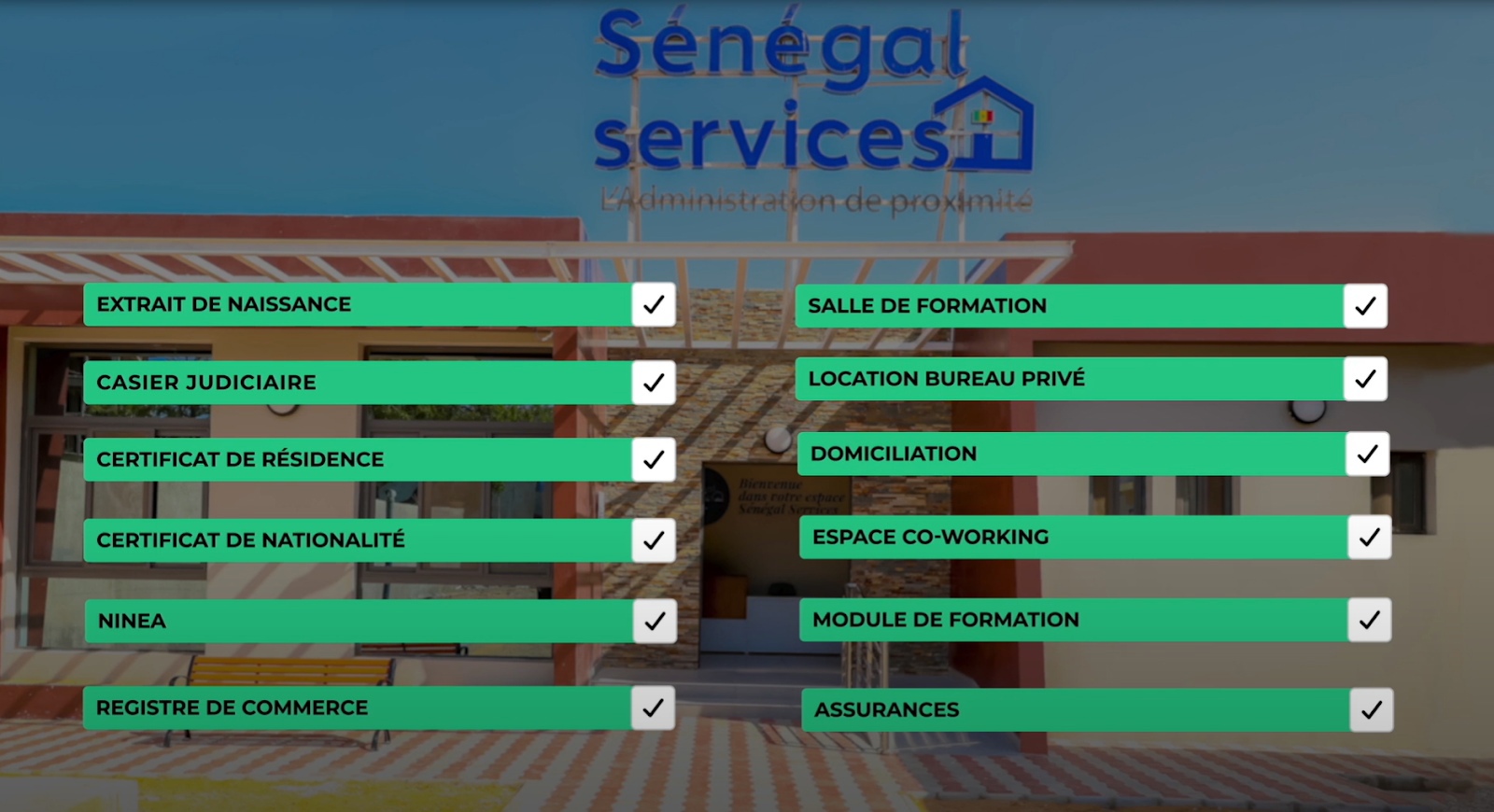
Source: Senegal Services portal (presentation of the portal on official Youtube channel)
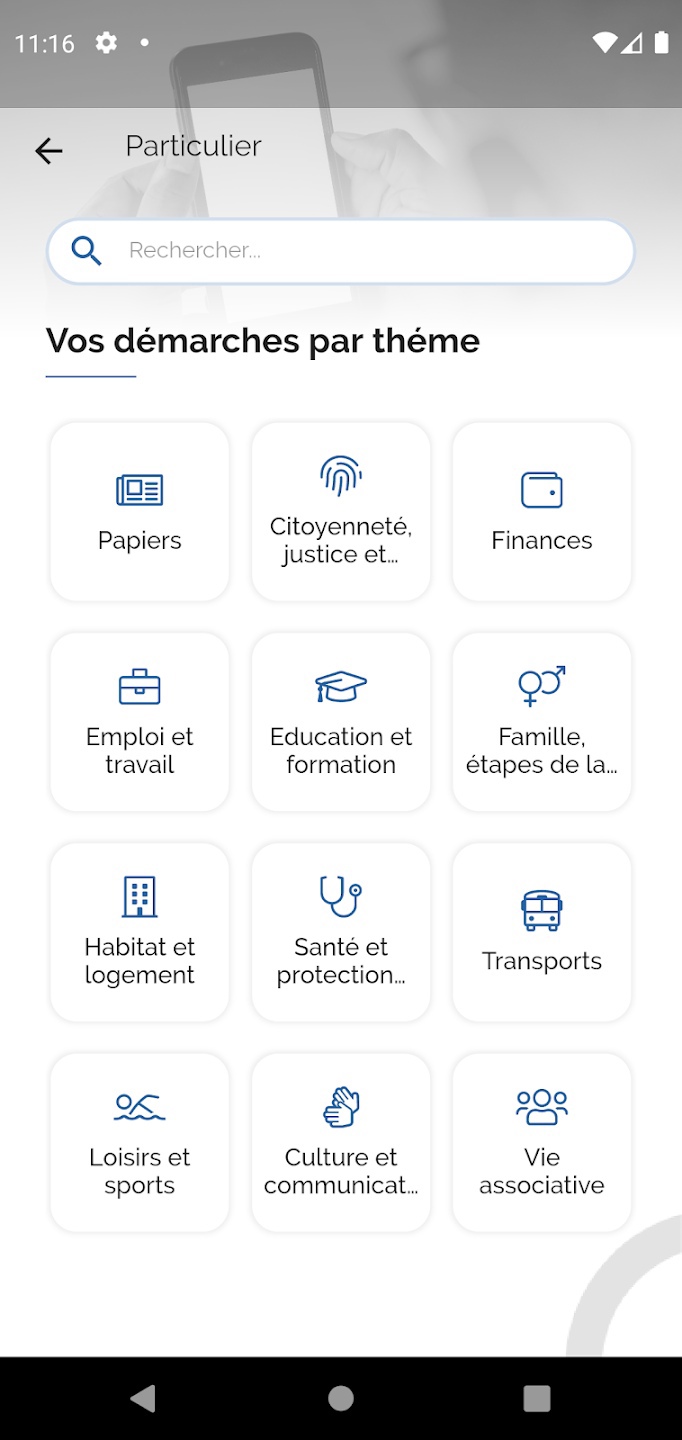
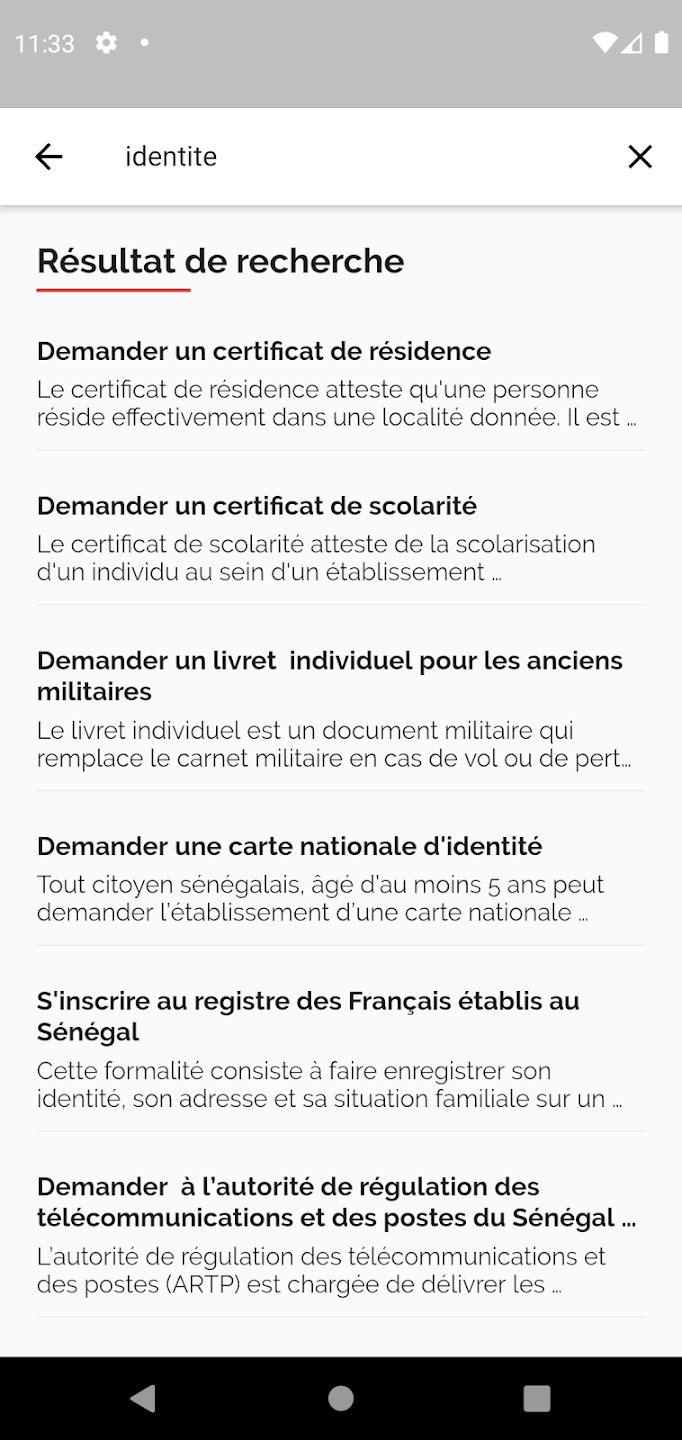
Source: Senegal Services app
In 2016, Senegal became the first country in ECOWAS to issue Biometric ID cards with the aim of facilitating intraregional migration. In continuation of this initiative, in 2022, the Senegalese Ministry of Digital Economy and Telecommunications in cooperation with the UNDP launched the National Digital ID (INN) project and is working on setting up a biometric population database. With a budget of 3.2 billion CFA francs (~5.1 million USD), the INN which is to be completed by 2024 will facilitate the authentication of citizens, improve the capacity and integration of government information systems.
The eService (eTax) Platform provided by the General Directorate of Taxes and Domains (Direction Générale des Impôts et des Domaines, DGID) was designed to enable taxpayers to declare and pay taxes online. To access the web application, a registration with a Unique Tax Identification Number (NINEA) is required. Upon registration, an e-mail containing access details (login and password by default) will be sent to the user’s tax centre.
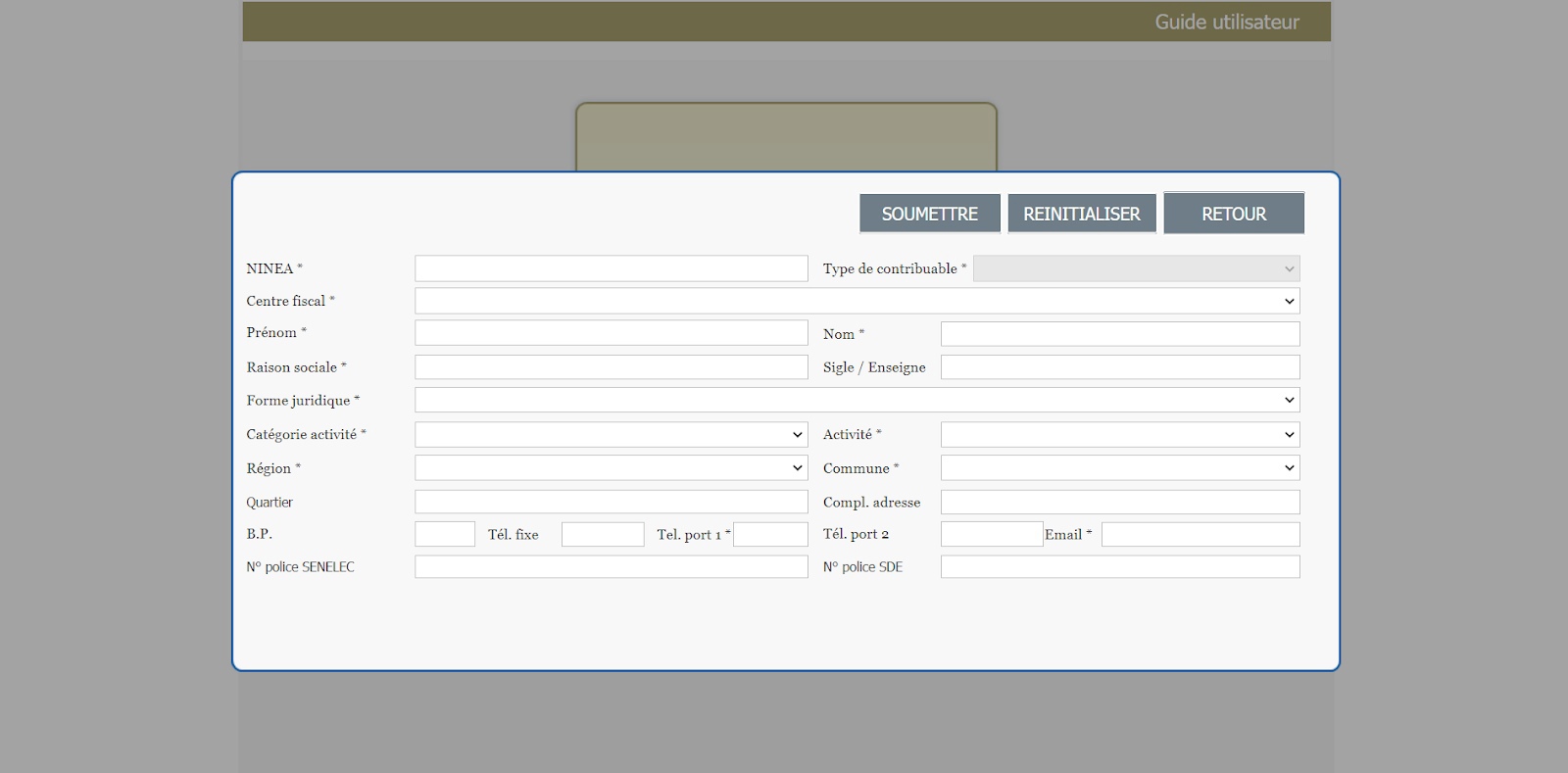
Source: eTax Platform by DGID (page for creating an account)
The e-services section of the DGID’s website lists a number of other digital platforms implemented by the agency, namely, Mon Espace Perso (allows users with turnover of less than 100 million CFA francs to have online access to tax files, to consult tax accounts, to declare taxes and duties), Sen-Etafi platform (enables the online filing of financial statements), PCF (used to check whether the importing person or a legal entity is subject to the tax compliance levy – PCF), allows downloading of declaration forms.
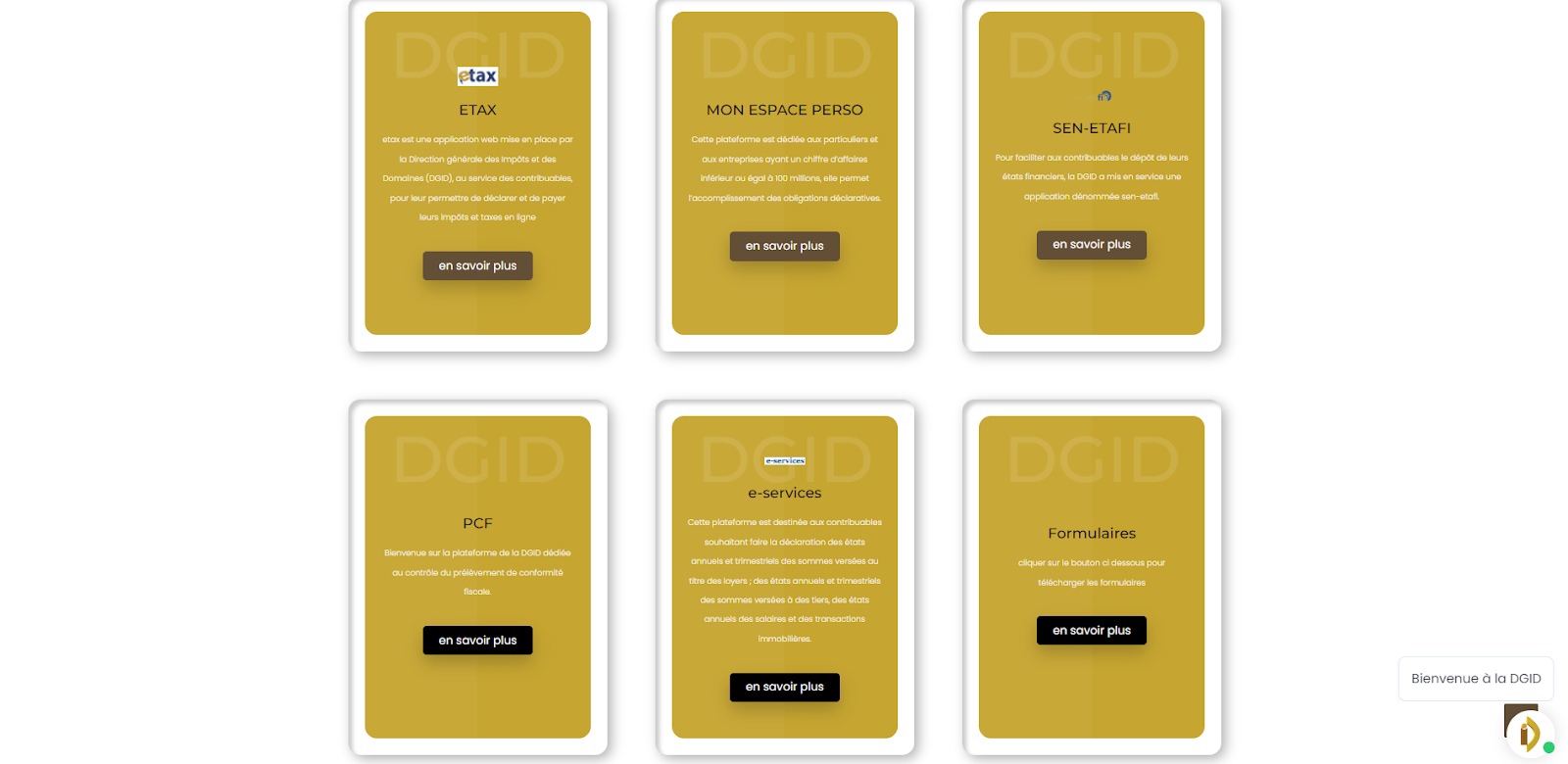
Source: DGID website (e-Services page)
The adoption of ICTs is relatively high in the educational sector. In 2016, the Digital Resources For All project (Ressources numériques pour tous, RNPT) was launched to compensate for the lack of teachers. Under the project, 240 of 308 high schools in Senegal received tablets, digital classrooms, and other digital equipment with a total cost of nearly 1 billion CFA francs (1.7 million USD).
The Information and Management System of National Education (Système d’Information et de Management de l’Education Nationale, SIMEN) was introduced in 2016 as well in cooperation with Microsoft Africa. It allows to check attendance, grades, etc. The mobile application was also developed.
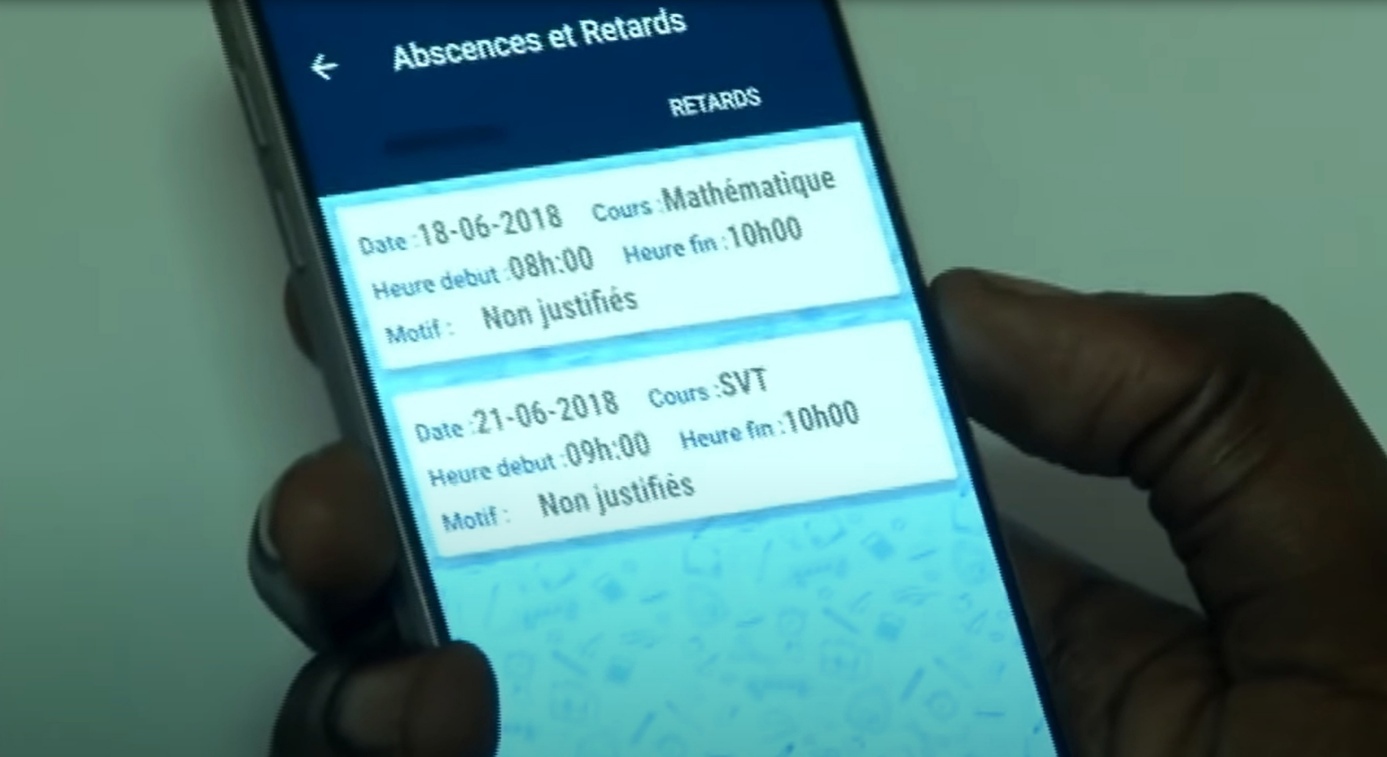
Source: Youtube ‘Canal Education’
In 2018, the National Education Identifiers platform (plateforme des Identifiants de l’Education Nationale, IEN) was put into operation with support and funding provided by UNICEF and Japan (with a total investment of about 592 million CFA francs, or 1 million USD). The platform was introduced to allow the issuance of National Education Identifiers used for accessing the SIMEN, educational online resources and using professional emails.
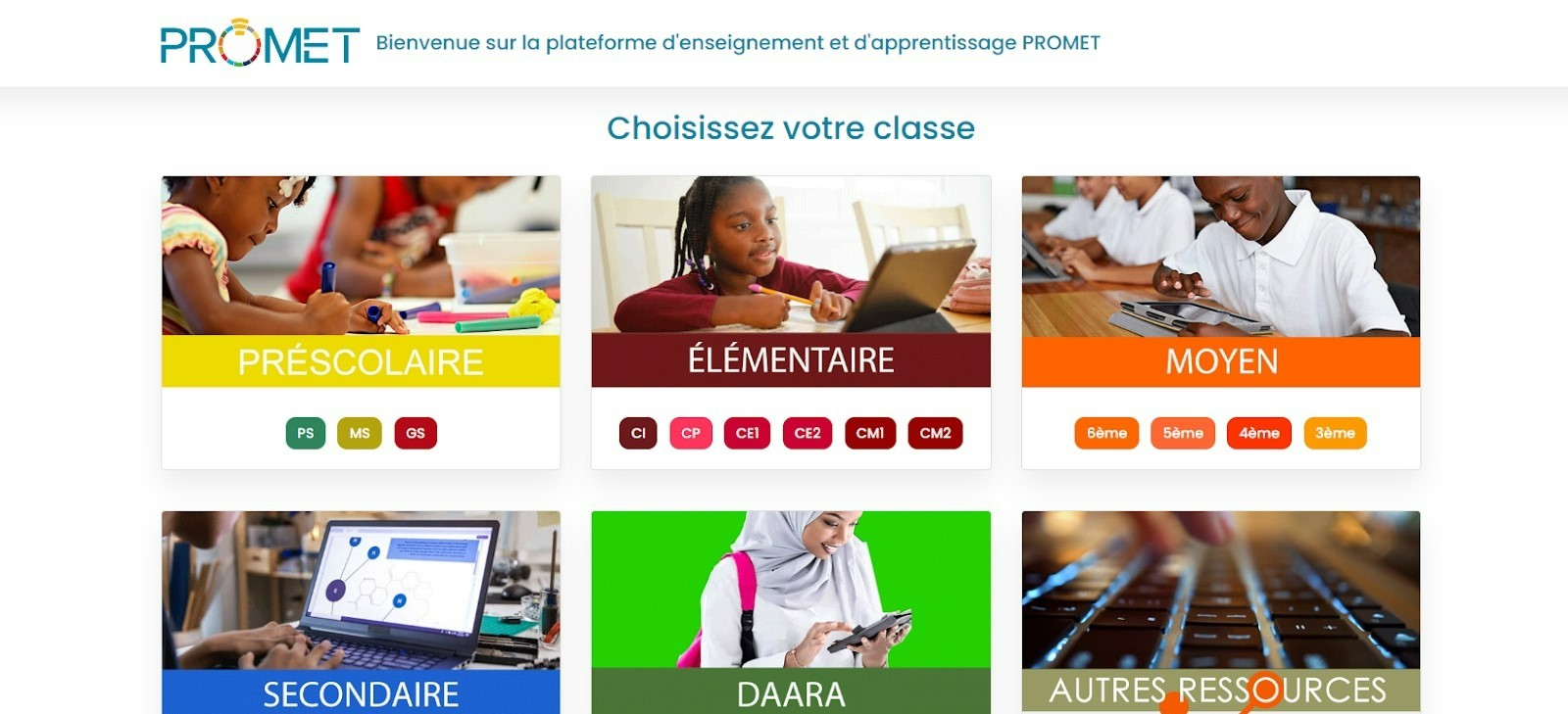
The PROMET project led by the Ministry of Education for the Development of Distance education (Ministère de l’Education pour le développement du Télé-enseignement) provides a number of educational platforms, including the PROMET teaching and learning platform and the Canal Education platform with educational content for students of all education stages in the video format.
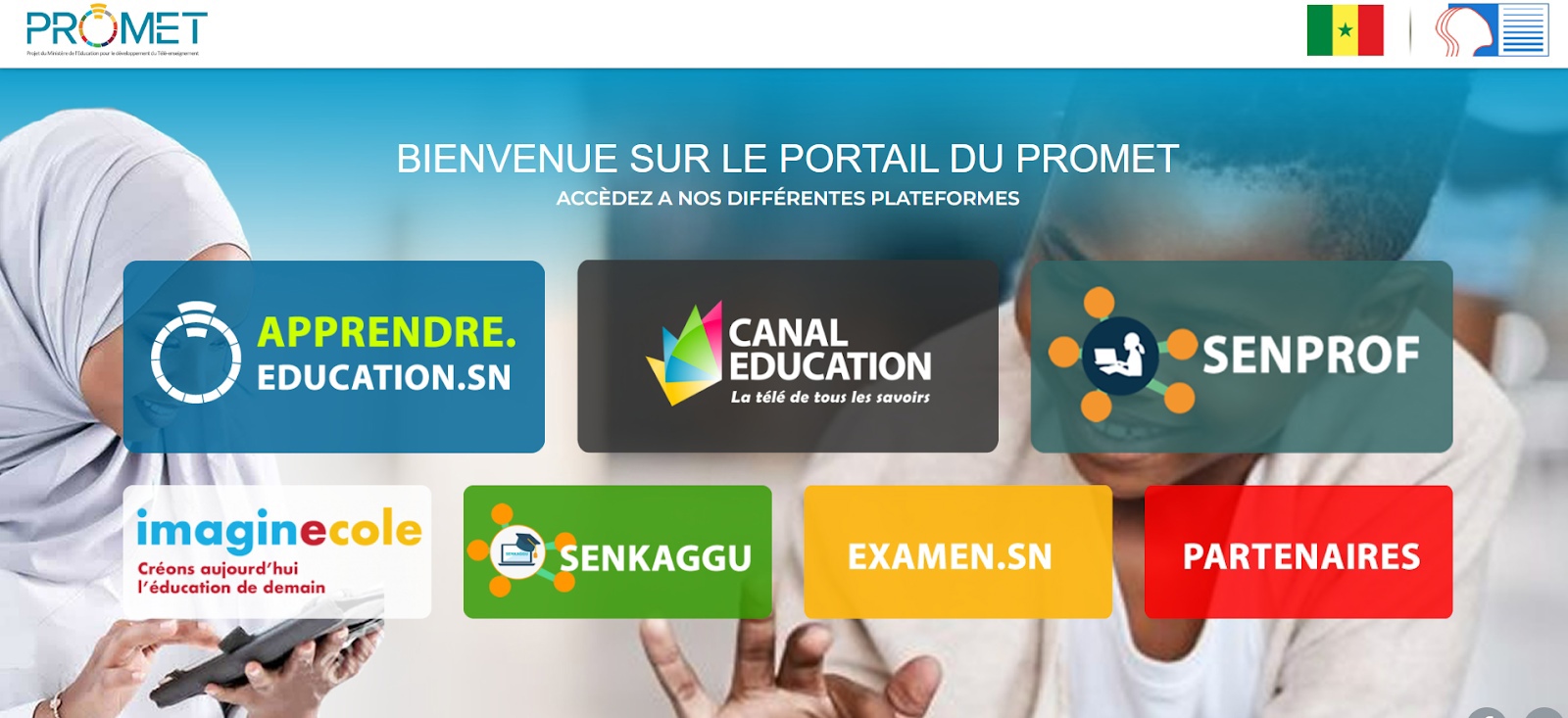
Source: PROMET (main page)
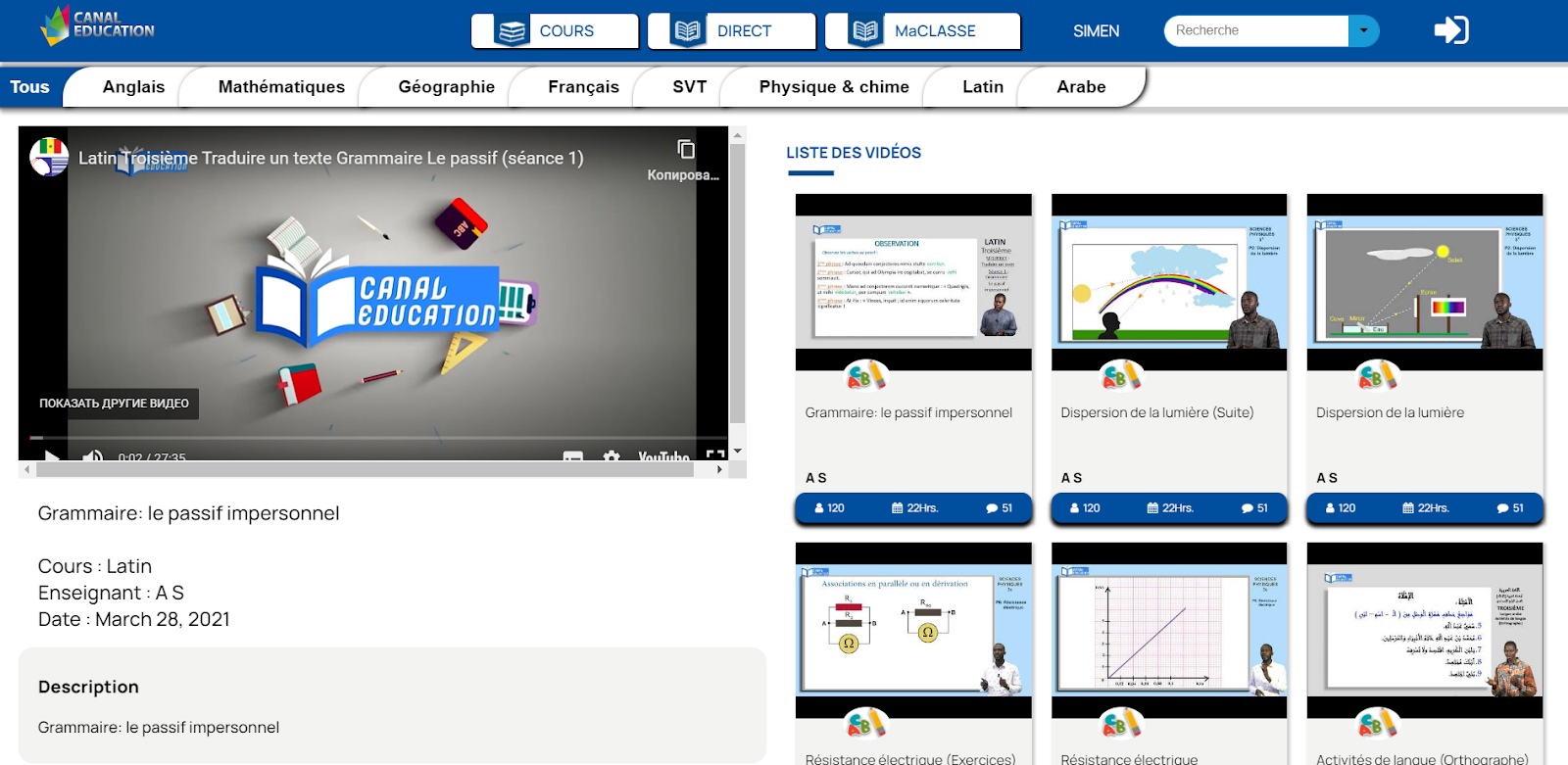
Source: Canal Education (main page for college level)
The platform Examen.sn was developed to help students prepare for exams and contains relevant tests and educational materials. However, some PDF files are not available (for instance, when trying to download the PDF of ‘Nature des mots prenoms’ the message ‘Missing or incorrect image file’ is displayed).
In order to improve the performance of the health system in Senegal, the Ministry of Health and Social Action developed the E-Health Strategic Plan 2018-2023. The Health and Social Card, Digital Health and Health Observatory Unit (CSSDOS) is the entity in charge of implementation of the Plan. Its website lists all available health facilities, yet does not offer any digital services.
The Health Information System of Senegal based on the DHIS2 system (District Health Information Software, an open-source platform developed and implemented under the leadership of the HISP Centre at the University of Oslo (UiO) in collaboration with its partners and used by 80 countries worldwide) was introduced in 2013 for collecting and reporting information on sanitary facilities. There is also the M-diabetes application launched in 2016 under the WHO and ITU’s ‘Be He@lthy Be Mobile’ programme. Users receive messages with useful information and recommendations. According to the 2015 research ‘mDiabetes: A diabetes prevention initiative via mobile phones in Senegal’, at the pilot stage of implementation, 1770 people received messages via service. The total amount reached 350,000 SMS, and the satisfaction level stood at 87.3%.
In July 2023, the Senegalese Local Development Agency (ADL) launched the E-Territoire programme in order to improve the quality of governance, inclusion, and the digitalisation of local authorities. Under the project, the E-Territory Days are held annually to discuss and support the adoption of ICTs by local authorities.
Regarding the civil participation services, a unified portal has not been developed, yet forms for complaints and appeals can be found on websites of a number of entities. Among the services to mention is the Diss’Eau project funded by AFD (France) and GRET aimed at strengthening citizen participation in the development of policies and monitoring of water and sanitation services. Under the project the Water and sanitation civil society organisations platform in Senegal (Plateforme des Organisations de la Société Civile pour l’Eau et l’Assainissement au Sénégal, POSCEAS) was created in 2018. The platform does not offer any digital services, only thematic reports.
Since 2022, citizens have the opportunity to consult the electoral file using their identification number. E-voting systems have not been introduced at any level. Among the projects concerning elections, it is worth mentioning the Senegal Vote, a digital programme for raising Senegalese citizens’ awareness about the electoral process.
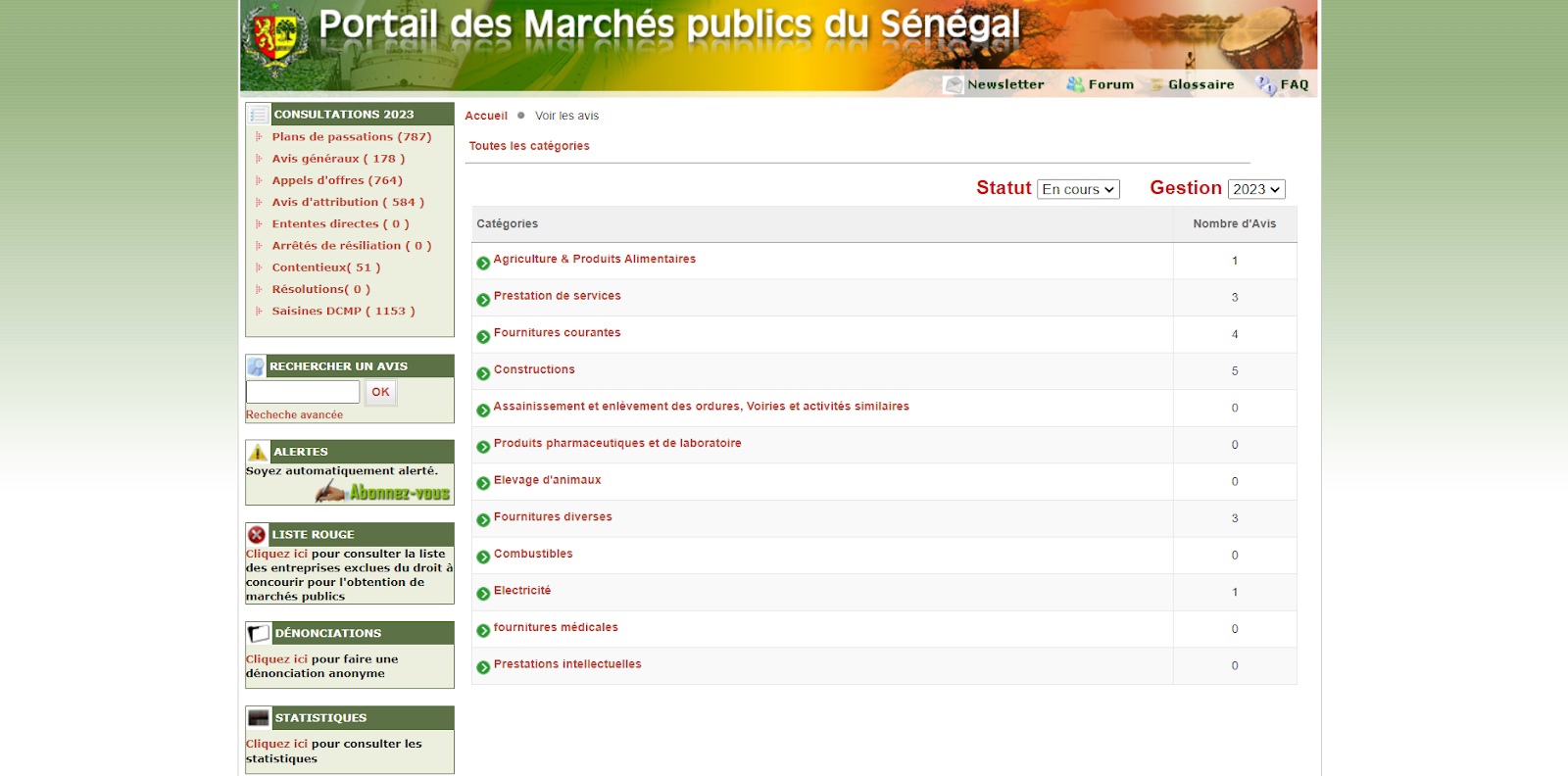
Information about tenders is published on the Public Procurement Portal of Senegal (Portail des Marchés Publics du Sénégal). It allows document search by keywords and categories (e.g. agriculture,sanitation and waste removal, service delivery, etc.). Procurement plans are published from 2020, the tenders – from 2022, whereas the statistics on awarded contracts and procurement plans are available from 2007/2008. The portal does not provide for a personal account and does not enable applying for a tender.
Being among the sectors with the largest share of employment in the country (nearly 22% of the population, according to the World Bank), the agricultural sector is still at a basic level of ICT adoption and implemented initiatives are often experimental.
The Yeesal Agri Hub project officially established in 2017 and supported by GIZ, FAO and others aims to provide services to those interested in agriculture and to support rural initiatives, promote ICTs adoption in the sector. Over the period 2017-2021 the project invested nearly 300,000 EUR in agripreneurship. Among its initiatives to mention are Agripreneur en Action II, Disrupt Agri-I, Future Farmers of Africa-II, etc. However, digital services have not been implemented under the project yet.
Among its initiatives to mention are Agripreneur en Action II, Disrupt Agri–I, Future Farmers of Africa–II, etc. However, digital services have not been implemented under the project yet. Furthermore, much attention is paid to addressing climate change via adopting digital solutions Thus, in 2017, FAO and World Meteorological Organisation launched the Digital Innovation to Tackle Climate Change Project in Rwanda and Senegal in order to improve their capacity to provide meteorological and climatological forecasts related to agricultural practices and facilitate farmers and fishers’ access to information.
Internet services in Senegal are no longer a luxury, but the cost of mobile broadband subscriptions still accounts for 12% of average monthly gross income per capita. At the same time, mobile broadband connections (3G and 4G) reach only 19% of the population, which is a modest coverage comparing with other West African countries (Côte d’Ivoire, Cape Verde, Ghana).
Senegalese digital financial services (DFS) face a lack of security and reliability. They are also insufficiently transparent. 90% of DFS users have been exposed to such challenges, such as poor network, financial losses because of the scams or frauds, or had difficulties navigating the menu.
DFS users in Senegal are very active, with the vast majority of Senegalese using two mobile money accounts. However, this usage is mainly focused on basic services such as cash-in/cash-out, receiving funds, account-to-account transfers and buying airtime. The digital credit and savings offer are very recent in Senegal, and still not widely adopted.
Despite having one of the highest Internet penetration rates in West Africa, there’s still a need to provide Internet to schools and other educational institutions. Efforts are also made to increase the electronic banking penetration to 50% in 2025.
The broad topic of digitization is given high political priority in Senegal. One reason for this is that the digital sector is seen as an opportunity to combat youth unemployment. As it was pointed out in the “Digital Senegal 2025” Strategy, the targets are ambitious: to bring digital up to 10% of Senegal’s GDP by 2025, and create 54,000 direct and 162,000 indirect workplaces. To promote employment through digital innovations, sustainable, human-centred and self-determined digital transformation must be done in Senegal.
Key public-sector actors agree that regulatory frameworks need to be updated, and digital governance needs to be enhanced. To consolidate the management of the industry, there is a need to establish the IT Board (Conseil National du Numérique). It will also provide a stronger voice to private players.
Moreover, authorities need to optimize the use of the country’s 4,000 km-long fiber-optic network.
Because of climate change, historical rain cycles have become increasingly unreliable. But digital innovations can assist farmers with weather forecasts and clear understanding of what to plant. Moreover, there is a demand to get information on best agricultural practices, livestock care, market prices, health and nutrition directly from specially developed applications, just by looking down at the screen. The quality of mobile infrastructure has improved dramatically in Senegal with many farmers having already adopted mobile technologies. However, these tools are not yet commonly used by them as part of their production. Consequently, digital tools should be leveraged to modernize local agriculture and help extension agents reach more farmers and cover larger territories.
National Best Practices
Senegal has made significant strides in implementing e-government services that improve efficiency, transparency, and accessibility in public service delivery. These initiatives can be shared with regional partners to enhance digital transformation across Africa.
M-diabetes application
M-diabetes application was launched in 2016 under the WHO and ITU’s ‘Be He@lthy Be Mobile’ programme. Users receive messages with useful information and recommendations. At the pilot stage of implementation, 1770 people received messages via service. The total amount reached 350,000 SMS, and the satisfaction level stood at 87.3%.
Data Protection Regulations
Senegal’s commitment to data protection in health information systems sets a benchmark for electronic data management. The country has established regulations that ensure patient privacy and facilitate secure data sharing. This expertise can be valuable for other nations striving to safeguard personal health information amidst increasing digitalization.
Regional Inspirations
Zimbabwe: Mukuru Digital Wallet
Zimbabwe has introduced an e-ID that simplifies the citizens’ access to various services, including mobile wallet transactions and offering local and international money transfers, free cashouts, and payment solutions.This has streamlined payments for services like water and electricity bills.
Community Health Programs in Ethiopia
Ethiopia’s implementation of community health worker programs has effectively increased healthcare access in rural communities. Senegal can adapt elements of this model to strengthen community engagement in health service delivery.
Authors:
Dione Assane
Olesya Kalashnik
Sofya Alypova